

The first step to starting a backyard flock is determining if you can keep chickens on your property. That means checking local requirements for flock limits, permits, coop standards, setbacks, and any approvals needed for the coop itself. Once you have that information, you can plan your setup with confidence.
To make the process easier, we researched several major cities and every county in Utah, bringing the key requirements and local contacts together in one place. Keep reading to learn what applies to your property and take the next step toward starting your flock.
Last Updated:
Is It Legal to Have Chickens in Your Backyard in Utah?

Yes, most areas in Utah allow backyard chickens, but it largely depends on where you live. Cities such as Salt Lake City, Sandy, and Spanish Fork allow them.
However, not all properties can have them. For example, Herriman, Orem, and Riverton prohibit them on lots smaller than 5,000 square feet, while Kearns requires at least 6,000 square feet. The best way to determine whether they’re allowed on your Utah property is to contact your local city or county official listed below.
Do You Need a Permit for Chickens in Utah?

Many areas require permits, while others do not. It depends on where you live. Cities like American Fork, Bountiful, Kearns, Millcreek, Ogden, and others require a permit to keep backyard chickens, while Cedar City, Draper, Lehi, and Logan do not.
In addition to a chicken-keeping permit, you may need a building permit or zoning approval for your coop.
How Many Chickens Can I Have in Utah?

Among the Utah cities with clearly established flock limits, the average allowance is about 8 chickens, with 6 to 10 being a common range. That said, the exact number of chickens you can have depends on where you live. Orem allows as few as 2 hens, while Salt Lake City allows up to 15. Draper permits up to 25 chickens on larger lots, and even larger flocks may be permitted in many rural or agricultural areas.
Lot size is one way to determine how many chickens you can have. The larger your property is, the more chickens you’re typically allowed to keep. However, it ultimately depends on what your city or county allows. You can find that information below.
Can I Let My Chickens Free-Range in My Backyard?

You can, but your chickens must stay within a secure enclosure or fenced portion of your property. Most city and county ordinances prohibit chickens from running at large, and many require a covered coop, attached run, or another predator-resistant enclosure.
Some areas allow chickens to roam within a fenced yard during the day, but they may still need to be secured in a coop at night. A secure coop and run also help protect your flock from predators.
The Hen House Collection offers custom coops with the sizes and features needed to meet local requirements. We also work with local dealers to help you find the right coop in your area.
Can I Have a Rooster in My Backyard in Utah?
Yes and no. It all depends on the zoning district your property is located in. Smaller properties in residential zones often prohibit roosters due to noise concerns, whereas larger agricultural properties typically permit them. Areas like Lehi, Riverton, West Jordan, and Tooele County are examples of locations where roosters may be prohibited based on property size. Check your city or county’s information below to determine if they’re allowed in your area.
Can I Sell My Chicken Eggs in Utah?
Utah allows qualifying small egg producers with fewer than 3,000 laying birds to sell eggs, but state food safety requirements and local land use restrictions still apply. Eggs must be properly labeled with the product name, quantity, producer’s name and address, refrigeration statement, and safe handling instructions. Producers selling wholesale must notify the Utah Department of Agriculture and Food. Producers selling directly to consumers may notify the department voluntarily.
Local ordinances may be more restrictive. Several Utah cities allow chickens only for household food production and prohibit selling eggs or earning income from the flock. Bountiful, Draper, Herriman, Orem, and Spanish Fork include restrictions of this kind. Confirm that commercial egg sales are permitted at your property before advertising or selling any eggs.
Chicken Laws for Cities in Utah
In most cases, your city or town officials will be responsible for enforcing backyard chicken laws, so it’s important to check with them before starting your flock. Below is a table with several major cities in Utah. Click on the left-hand column to view your city’s requirements, or click on the right-hand column to contact the appropriate official.
Planning and zoning departments are linked to help you determine if your property is properly zoned for chickens. Other flock requirements may need to be confirmed with additional local officials.
Does American Fork, Utah, Allow Backyard Chickens?
Yes, you can keep backyard chickens in American Fork. A yearly $15 permit is required, and your property size determines how many hens you may have.
- Permit: You must register your chickens and obtain a $15 permit from the city. The permit must be renewed annually.
- Flock limit: You may keep between 3 and 6 hens, depending on your property size.
- Roosters: Roosters are prohibited on residential properties.
- Zoning: Chickens are permitted on residential properties in residential areas.
- Setbacks: Your coop must be at least 15 feet from any property line and 6 feet from any residence.
- Coop standards: Chickens must remain in a secure, enclosed outdoor coop or contained backyard area. Store feed in rodent and predator-proof containers.
Before adding chickens to your backyard, contact American Fork City Administration at 801-763-3000 for registration and permit information. The Planning Department can answer zoning and property questions at 801-763-3060.
Does Bountiful, Utah, Allow Backyard Chickens?
Yes, you may keep up to 8 hens on a qualifying residential property in Bountiful. You must obtain a one-time city license and follow the enclosure, setback, and sanitation requirements.
- Permit: A one-time city license is required. The application must be signed by the property owner, and the fee is $5.
- Flock limit: You may keep up to 8 hens.
- Roosters: Roosters and crowing hens are prohibited.
- Zoning: Chickens are permitted only on properties containing a detached single-family home.
- Setbacks: The coop or enclosure must be in the rear yard, at least 20 feet from a primary residence on an adjoining property, and at least 5 feet from any property line. A coop using a heating device must also be at least 10 feet from any dwelling.
- Coop standards: Chickens must remain in a covered, ventilated, rodent-resistant, and predator-resistant coop or enclosed area. The structure cannot be made from scrap or dilapidated materials, and its exterior must be painted or similarly treated.
- Sanitation: Keep the coop and roaming area clean enough to prevent detectable odors at the property line. Feed must be stored and dispensed in rodent-proof and predator-proof containers.
- Use restrictions: Chickens may be kept for household egg production only. Selling eggs or earning income from the flock is prohibited.
Contact the Bountiful Planning Department to confirm your property qualifies and obtain the required city license.
Does Cedar City, Utah, Allow Backyard Chickens?
Yes, you may keep up to 6 chickens on a residential lot. Your flock must be kept for personal rather than commercial purposes.
- Permit: A permit is not required to keep chickens. A coop with a permanent electrical connection must meet the city’s electrical code and pass a building inspection.
- Flock limit: You may keep up to 6 chickens per lot.
- Roosters: Roosters are prohibited.
- Zoning: Chickens may be kept on residential lots within Residential Zones for noncommercial purposes.
- Setbacks: Your coop must meet the setbacks for your zoning district and remain at least 35 feet from neighboring homes.
- Coop standards: Chickens must be housed in a covered coop within a secure outdoor enclosure.
The Cedar City Building and Zoning Department can clarify setback, construction, and inspection requirements at 435-865-4519. Be sure to verify all requirements with them before starting your backyard flock.
Does Draper, Utah, Allow Backyard Chickens?
Yes, you may keep backyard chickens as long as your property meets the city’s requirements.
- Permit: A conditional use permit is not required. A building permit may be required based on the size of the coop or proposed alterations.
- Flock limit:
| Lot Size | Maximum Chickens |
| Up to 11,500 sq. ft. | 6 chickens |
| Each additional 1,500 sq. ft. | 1 additional chicken |
| Maximum on any qualifying property | 25 chickens |
- Roosters: Roosters and crowing hens are prohibited.
- Zoning: Chickens are permitted in all residential and agricultural zones on properties with a detached single-family home or a detached single-family home with a detached accessory dwelling.
- Setbacks: Coops, pens, runs, and compost areas must be at least 30 feet from homes on adjoining properties, 5 feet from property lines, and 10 feet from a habitable dwelling on the same property.
- Coop standards: A coop and connected run are required behind the primary home. They must be secured against rodents, vermin, predators, and escape, while the yard must have sight-obscuring fencing.
- Sanitation: Remove manure at least weekly or more often when needed to prevent odors, insects, vermin, and other nuisances. Clean water must always be available, and dead birds or rotting eggs must be removed within 24 hours.
- Use restrictions: Chickens may be kept only to benefit the family living on the property. Selling eggs, chickens, or other poultry products is prohibited.
Contact Draper City Code and Enforcement to determine the requirements for your property before starting a backyard flock.
Does Eagle Mountain, Utah, Allow Backyard Chickens?
Yes, backyard chickens are permitted on residential properties in Eagle Mountain. Specific flock limits, permit requirements, rooster restrictions, and coop standards are not clearly established in the available regulations.
Contact the city Planning Department to confirm the requirements for your property before purchasing chickens or installing a coop.
Does Herriman, Utah, Allow Backyard Chickens?
Yes, chickens are permitted in several residential zones. Your lot size and zoning district determine how many chickens you may keep.
- Flock limit:
| Lot Size | Maximum Chickens |
| Less than 5,000 sq. ft. | Not permitted |
| 5,000 to 7,999 sq. ft. | 4 hens |
| 8,000 to 9,999 sq. ft. | 6 hens |
| 10,000 sq. ft. or larger | 10 hens |
- Roosters: Roosters and crowing hens are prohibited.
- Zoning: Backyard chickens are permitted on detached single-family lots in the R-1 10, R-1 15, R-2 10, and R-2 15 zones. Separate family food production rules apply in the A-1 10, A-1 21, A-1 43, R-1 21, and R-1 43 zones.
- Setbacks: The coop must be at least 15 feet from the home on the same property and at least 25 feet from a home on an adjacent lot. Properties using the family food production allowances must keep animals and fowl at least 40 feet from dwellings on adjacent properties. Barns, coops, pens, stables, and corrals associated with family food production must be at least 40 feet from a street.
- Coop standards: Chickens must remain inside an enclosure or fenced area at all times. The coop must be maintained in good condition and placed behind a fence in the side or rear yard. Coops are considered accessory buildings and must meet the applicable requirements for the property’s zoning district.
- Sanitation: Keep the coop and enclosure clean while controlling odors, noise, insects, rodents, dust, and other nuisances. The property may be inspected following a complaint or observed violation.
- Use restrictions: Chickens may be kept for personal use only. Commercial breeding and the sale of eggs or fertilizer are prohibited. Humane slaughter is allowed in an area hidden from public view, provided all waste is handled according to county health department regulations.
Before setting up your flock, contact Herriman City Planning & Zoning Department to confirm your zoning district, flock limit, setbacks, and accessory building requirements.
Does Kearns, Utah, Allow Backyard Chickens?
Yes, you may keep hens on a qualifying residential property. A poultry permit is required, and the flock limit depends on your lot size.
- Permit: A poultry permit from Salt Lake County Animal Services is required.
- Flock limit:
| Lot Size | Maximum Hens |
| Less than 6,000 sq. ft. | Not permitted |
| 6,000–9,999 sq. ft. | 4 hens |
| 10,000–14,999 sq. ft. | 8 hens |
| 15,000–19,999 sq. ft. | 12 hens |
| 20,000–29,999 sq. ft. | 16 hens |
| Each additional 10,000 sq. ft. | 8 additional hens |
- Roosters: Roosters are prohibited.
- Zoning: Chickens are permitted on qualifying single-family residential properties used for a single or 2-family home.
- Setbacks: The coop must be in the rear yard and at least 40 feet from neighboring homes. It must also meet the accessory structure setbacks for your zone.
- Coop standards: Chickens must remain in a secure, covered, weatherproof, ventilated, and predator-resistant enclosure. Provide at least 2.5 square feet per bird with access to a fenced outdoor area or 6 square feet per bird without outdoor access.
Obtain your permit through Salt Lake County Animal Services at 385-468-7387. Greater Salt Lake Municipal Services District Planning and Development Services can answer zoning questions at 385-468-6700.
Does Layton, Utah, Allow Backyard Chickens?
Yes, chickens are permitted on qualifying properties. Your zoning district and lot size determine your permit requirements, flock limit, and enclosure standards.
- Permit: A one-time permit is required for properties in the R-1-6, R-1-8, R-1-10, and R-S zones.
- Flock limit: Chickens are permitted on qualifying properties of at least 8,000 square feet. Properties in the A and R-S zones with at least 20,000 square feet may keep up to 25 chickens per 20,000 square feet.
- Zoning: Chickens are permitted in the R-1-6, R-1-8, R-1-10, R-S, and A zones.
- Setbacks: Pens up to 120 square feet must be at least 5 feet from the side and rear property lines. On lots of at least 20,000 square feet, pens larger than 120 square feet require 10-foot side and rear setbacks.
- Coop standards: Coops and pens must be in the rear yard, remain under 7 feet tall, and be enclosed by a fence. Chickens must remain inside a coop, pen, or run.
Contact Layton Planning and Zoning at 801-336-3780 for permits and property requirements. The Building Division can answer construction questions at 801-336-3760.
Does Lehi, Utah, Allow Backyard Chickens?
Yes, chickens are generally permitted in residential and agricultural districts. Flock limits and rooster rules change based on zoning and acreage.
- Permit: A permit is not required for up to 8 Category Four animals at a detached single-family home. This category combines chickens, ducks, rabbits, dogs, and cats. A Conditional Use Permit may be required to exceed that limit in certain districts.
- Flock limit: Most qualifying residential properties may keep up to 8 Category 4 animals. Properties with attached units in the MU, R-2, R-2.5, and R-3 districts are limited to 4. Larger agricultural properties may receive higher limits.
- Roosters: Roosters are permitted in the A-5, TH-5, and A-1 districts. They are also allowed on qualifying properties of at least 1 acre in the RA-1 and R-1-22 districts.
- Zoning: Chickens are permitted in Lehi’s agricultural and residential districts, including A-5, TH-5, A-1, RA-1, R-1-22, R-1-15, R-1-12, R-1-10, R-1-8, R-2, R-2.5, R-3, MU, and PC.
- Setbacks: Your coop must be at least 30 feet from a neighboring home or occupied building and 25 feet from a public road.
- Coop standards: Animal facilities must remain clean and properly maintained to avoid creating a nuisance.
Lehi Planning can confirm your zoning district at 385-201-1000. Questions about coop construction can be directed to the Building and Inspection Department at 385-201-1035. Be sure to confirm all applicable details before keeping chickens in your backyard.
Does Logan, Utah, Allow Backyard Chickens?
Yes, chickens may be kept for personal use on residential lots with detached single-family homes. The number permitted is calculated using your property’s acreage.
- Permit: The municipal code does not require a permit to keep chickens for noncommercial purposes.
- Flock limit: Multiply your acreage by 2.0 to determine the property’s Animal Equivalent Units. Divide that number by 0.05, the value assigned to each chicken. A quarter-acre property may keep up to 10 chickens.
- Roosters: Roosters and crowing hens are prohibited in residential zones.
- Zoning: Chickens are permitted on residential lots containing a detached single-family home.
- Setbacks: The coop must meet your district’s accessory structure setbacks and remain at least 25 feet from neighboring homes. It must be in a fenced side or rear yard.
- Coop standards: The coop must be covered, clean, sanitary, and free from offensive odors.
Logan Planning and Zoning can answer land use questions at 435-716-9021. The Building Department at 435-716-9030 can help with coop requirements. Be sure to verify all applicable details before starting your backyard flock.
Does Millcreek, Utah, Allow Backyard Chickens?
Yes, qualifying properties may keep up to 10 domestic fowl. You must obtain a Domestic Fowl Permit before starting your flock.
- Permit: Obtain a Domestic Fowl Permit through Salt Lake County Animal Services.
- Flock limit: You may keep up to 10 domestic fowl per lot.
- Roosters: Roosters are prohibited.
- Setbacks: The coop must be in a side or rear yard and at least 40 feet from any dwelling and the street.
- Coop standards: Chickens must remain in a coop or enclosure, although they may enter a fenced yard during daylight hours. Keep the enclosure clean and control dust, odors, and erosion.
Salt Lake County Animal Services handles permits. Millcreek Planning and Zoning can clarify property requirements at 801-252-6408.
Does Murray, Utah, Allow Backyard Chickens?
Yes, you may keep a limited number of hens at a detached single-family home. Registration is required, and the flock limit depends on your lot size.
- Permit: You must register with the city and confirm that your property meets the ordinance.
- Flock limit:
| Lot Size | Maximum Hens |
| Less than 6,000 sq. ft. | 4 hens |
| 6,000 to 9,999 sq. ft. | 5 hens |
| 10,000 to 11,999 sq. ft. | 6 hens |
| 12,000 sq. ft. or larger | 8 hens |
- Roosters: Roosters are prohibited.
- Zoning: Chickens are permitted at properties used as detached single-family homes.
- Setbacks: The coop must be at least 5 feet from property lines, 10 feet from your home, and 25 feet from neighboring homes.
- Coop standards: The combined coop and run must provide 4 square feet per chicken and be under 7 feet tall. The enclosure must be ventilated, predator-resistant, and rodent-resistant. Chickens may not roam freely.
Contact Murray Planning at 801-270-2420 to confirm zoning and registration requirements. Code Enforcement can answer compliance questions at 801-270-2417.
Does Ogden, Utah, Allow Backyard Chickens?
Yes, you may keep up to 6 hens under the following conditions:
- Permit: You need a land-use permit before building a coop or keeping chickens. After approval, purchase an annual animal license from the City Cashier.
- Roosters: Roosters are prohibited.
- Zoning: Chickens are permitted on qualifying residential lots occupied by the property owner. The fenced rear yard must contain at least 2,000 square feet of open area.
- Setbacks: The coop and run must be at least 5 feet from property lines and your home. They must remain at least 25 feet from neighboring homes.
- Coop standards: The combined coop and run may not exceed 120 square feet or 7 feet in height. Use durable exterior materials and maintain a clean, secure enclosure.
Ogden Planning handles permitting and zoning questions at 801-629-8930, while Code Services can provide compliance guidance at 801-629-8961. Be sure to check with them before keeping backyard chickens.
Does Orem, Utah, Allow Backyard Chickens?
Yes, they are allowed on single-family residential properties in Orem. Your lot must contain at least 5,000 square feet, and its size determines how many chickens you may keep.
- Flock limit:
| Lot Size | Maximum Hens |
| Less than 5,000 sq. ft. | Not permitted |
| 5,000 to 6,999 sq. ft. | 2 hens |
| 7,000 to 7,999 sq. ft. | 3 hens |
| 8,000 to 8,999 sq. ft. | 4 hens |
| 9,000 to 9,999 sq. ft. | 5 hens |
| 10,000 to 19,999 sq. ft. | 6 hens |
| 20,000 to 29,999 sq. ft. | 10 hens |
| 30,000 sq. ft. to less than 1 acre | 12 hens |
- Roosters: Roosters are prohibited on residential lots smaller than 1 acre.
- Zoning: Hens are permitted on single-family residential lots containing at least 5,000 square feet. Separate standards apply to properties of 1 acre or more, where up to 20 poultry or fowl may be allowed per acre.
- Setbacks: The coop or chicken tractor must be at least 10 feet from every property line. On properties of 1 acre or more, poultry barns, pens, and corrals must be at least 40 feet from a dwelling on the same lot and 85 feet from a neighboring dwelling.
- Coop standards: Chickens must be kept in a predator-resistant coop or chicken tractor at night. The enclosure must provide sufficient light, air, and space, and cannot be placed in the front yard.
- Containment: Chickens may roam only within an enclosed rear yard.
- Sanitation: Clean the enclosure regularly to prevent offensive odors and other nuisances.
- Use restrictions: Chickens cannot be kept for commercial production, and slaughtering chickens on the property is prohibited.
Contact the Community Development Department to confirm your property’s zoning, flock limit, and applicable enclosure requirements before setting up your coop.
Does Provo, Utah, Allow Backyard Chickens?
Yes, backyard chickens are allowed, but you must register annually, and your lot size determines the flock limit.
- Permit: You must register your chickens annually and pay the applicable licensing fee.
- Flock limit: Your lot size determines the number of hens permitted. Provo provides a Chicken Permit map for checking individual properties.
- Zoning: Chickens are permitted in qualifying residential zones.
- Setbacks: Coops must be in the rear yard. Confirm the required distances for your property before installation.
- Coop standards: Chickens must remain in a secure, clean, and predator-resistant enclosure.
- Roosters: Roosters are prohibited.
Provo Animal Control can confirm permit, flock, and enclosure requirements at 801-852-6210. You can also contact Provo 311 for property-specific guidance. Just be sure to verify all details regarding your flock and enclosure first.
Does Riverton, Utah, Allow Backyard Chickens?
Yes, chickens are permitted. Your lot size and zoning determine the flock limit and whether roosters are allowed.
- Flock limit:
| Lot Size or Zoning | Maximum Chickens | Roosters |
| Less than 5,000 sq. ft. | Not permitted | Not permitted |
| 5,000 to 7,999 sq. ft. | 4 hens | Prohibited |
| 8,000 sq. ft. or larger in a standard single-family residential zone | 6 hens | Prohibited |
| Qualifying RR-22 or R-1 property of at least 0.5 acre | 20 chickens per 0.5 acre | May be permitted |
- Zoning: Chickens are permitted in single-family residential zones and qualifying RR-22 and R-1 zones with animal rights.
- Setbacks: Chicken housing must be at least 40 feet from your home and 25 feet from neighboring homes.
Riverton Planning can confirm your zoning, animal rights, and flock allowance at 801-208-3149. Reach out to them to verify all applicable details before starting your backyard flock.
Does Salt Lake City, Utah, Allow Backyard Chickens?
Yes, you may keep up to 15 hens. An animal permit and compliant enclosure are required.
- Permit: Obtain a permit through Salt Lake County Animal Services.
- Roosters: Roosters are prohibited.
- Zoning: Chickens are permitted on residential lots used for one-family, two-family, or multifamily housing.
- Setbacks: The coop must be in the rear yard and at least 25 feet from neighboring homes.
- Coop standards: Provide 2 square feet per chicken when the birds have access to an enclosed outdoor area, or 6 square feet per chicken when they remain inside. The coop must be covered, ventilated, predator-resistant, clean, and sanitary.
Salt Lake County Animal Services handles chicken permits. Contact Salt Lake City Planning and Zoning at 801-535-7700 for land-use questions, or Building Services at 801-535-7155 for coop construction guidance.
Does Sandy, Utah, Allow Backyard Chickens?
Yes, you may keep up to 10 chickens on residential property in Sandy. Chickens are allowed in addition to the 6 common household pets permitted per property, but your flock must be kept for family use and cannot create a nuisance.
- Flock limit: You may keep up to 10 chickens in addition to the 6 common household pets allowed on the property.
- Roosters: Roosters are not permitted as household pets.
- Use restrictions: Household pets must be kept for family use only.
- Nuisances: Chickens must be maintained without creating a nuisance.
Sandy Animal Services can clarify any licensing or animal control requirements. Contact the Community Development Department to confirm your property’s zoning and the standards for your coop or enclosure.
Does Saratoga Springs, Utah, Allow Backyard Chickens?
Yes, you may keep up to 10 hens. Your property must meet strict coop, setback, sanitation, and pest-control standards.
- Roosters: Roosters and other types of poultry are prohibited.
- Zoning: Chickens are permitted in the R1-40, R1-20, and R1-10 zones.
- Setbacks: Coops, pens, runs, and compost piles must be at least 10 feet from property lines, 6 feet from your home, and 30 feet from neighboring homes.
- Coop standards: A fenced yard does not replace the required coop. The enclosure must prevent access by rodents and predators, remain clean, and control odors.
Contact Saratoga Springs at 801-766-9793 to confirm permit requirements and your property’s zoning.
Does South Jordan, Utah, Allow Backyard Chickens?
Yes, as long as your lot contains at least 10,000 square feet and the South Jordan Planning Department approves your property through the Residential Chickens Overlay Zone process.
- Permit: A one-time residential chicken permit, application fee, and scaled plot plan must be submitted to the South Jordan Planning Department. The permit does not transfer to a new owner or primary occupant.
- Flock limit: You may keep up to 6 chickens.
- Roosters: Roosters are prohibited in residential zones.
- Zoning: Chickens may be approved through the Residential Chickens Overlay Zone on qualifying properties in the R-1.8, R-2.5, R-3, R-4, and R-5 single-family zones. Agricultural properties follow separate farm animal regulations.
- Setbacks: The coop must be at least 10 feet from the home on the property, 5 feet from the rear and side property lines, and 40 feet from a home on an adjoining property.
- Coop standards: The coop must meet the accessory building requirements for the property’s underlying zone, including size, height, setbacks, and rear lot coverage. Submit any required construction plans to the South Jordan Building Department. A building permit is required for a structure larger than 200 square feet.
- Sanitation: Keep the coop, enclosure, and feeding area clean and maintained to prevent odors, rodents, predators, and other nuisances.
- Use restrictions: Chickens and eggs must be raised for family food production. Outdoor slaughtering or processing is prohibited.
Contact the South Jordan Planning Department to confirm your property qualifies for the Residential Chickens Overlay Zone, submit your plot plan, and obtain the required permit. Contact the South Jordan Building Department about coop construction requirements.
Does Spanish Fork, Utah, Allow Backyard Chickens?
Yes, so long as your property contains at least 5,000 square feet and has a qualifying residential use.
- Flock limit: You can keep up to 6 hens.
- Roosters: Roosters are prohibited.
- Zoning: Hens are permitted in any residential zone when the principal use is a single-family home, qualifying duplex, or twin home.
- Setbacks: The coop must be at least 25 feet from neighboring residential structures, 6 feet from the primary home, and comply with the accessory structure setbacks for the applicable zoning district.
- Coop standards: A structurally sound, predator-resistant coop with solid walls and a solid roof is required. Provide at least 2.5 square feet of coop space per chicken when an outdoor enclosure is available, or 6 square feet per chicken without one. A separate enclosure must provide at least 3 square feet per bird.
- Placement: Coops and enclosures must be placed in the rear yard or a qualifying interior side yard and screened from public view. Special placement and screening standards apply to corner lots.
- Containment: Chickens must remain within the coop, an attached enclosure, or a fully enclosed rear yard. Fencing used as an enclosure must be at least 6 feet high, sight-obstructing, and secured along the bottom.
- Sanitation: Clean the coop and enclosure at least weekly and more often when necessary to prevent odors at the property line. Remove dead birds and unused eggs within 24 hours.
- Use restrictions: Chickens may be kept only for household egg production. Selling eggs or earning income from the flock is prohibited.
- Feed and water: Store feed in rodent-resistant and predator-resistant containers, and provide clean water at all times.
Contact Spanish Fork Community Development to confirm your property qualifies and verify the applicable accessory structure setbacks before installing your coop.
Does St. George, Utah, Allow Backyard Chickens?
Yes, you may keep a limited number of hens on your property. The permitted flock size is based on lot area, with a maximum of 16 animals.
- Flock limit: You may keep 6 adult hens per 1,000 square feet of lot area, with no more than 16 animals on one lot.
Additional permit, rooster, setback, and enclosure requirements may apply to your property. Contact the St. George Community Development Department at 435-627-4000 to confirm your zoning and the requirements for your proposed flock and coop.
Does Taylorsville, Utah, Allow Backyard Chickens?
Yes, you can keep backyard chickens in Taylorsville under the following conditions:
- Permit: You must receive a residential chicken permit before keeping hens.
- Setbacks: The coop must be at least 25 feet from an occupied structure on neighboring property and located in the rear yard. Limited placement exceptions may apply to unusually shaped lots.
- Coop standards: The coop must remain under 8 feet tall and be freestanding, roofed, lockable, rodent-resistant, and predator-resistant. Remove droppings at least weekly.
Taylorsville Community Development handles permits and property requirements at 801-963-5400. Code Enforcement can answer compliance questions at 801-955-2013.
Does Tooele, Utah, Allow Backyard Chickens?
Yes, chickens are permitted in several residential and rural zoning districts. Flock limits and rooster allowances change based on your zone, so be sure to verify these requirements with Tooele officials:
- Permit: Confirm the need for a chicken or coop permit with Community Development.
- Flock limit: The R1-10 district permits up to 6 combined chickens, ducks, and rabbits per lot.
- Zoning: Chickens are permitted in the R1-7, R1-10, RR-1, RR-5, and MU-160 districts.
Tooele Community Development can clarify zoning, permit, coop, and rooster requirements at 435-843-2132.
Does West Jordan, Utah, Allow Backyard Chickens?
Yes, so long as you comply with the city’s requirements.
- Permit: Obtain a fowl-keeping permit through West Jordan Animal Services.
- Flock limit: You may keep up to 5 laying hens and 5 chicks.
- Zoning: Chickens are permitted in residential zones with city approval.
- Setbacks: The coop must be in a rear or interior side yard, at least 5 feet from your property line and 20 feet from neighboring homes. A coop with a heating device must be at least 10 feet from your home.
- Coop standards: Provide at least 1.5 square feet of roosting space per chicken. Birds without outdoor access need 6 square feet of floor space each. Secure all food and feeding areas against insects and rodents.
- Roosters: Roosters and crowing hens are prohibited in standard residential areas. They may be permitted in rural residential and agricultural zones.
West Jordan Animal Services handles permits and chicken-keeping questions at 801-282-3951. Contact the city at 801-569-5000 for broader zoning or building guidance. Be sure that your setup complies with all applicable requirements listed above.
Does West Valley City, Utah, Allow Backyard Chickens?
Chickens appear to be permitted as household pets in West Valley City, but the specific requirements are unclear. Before starting your flock, confirm the applicable flock limit, rooster rules, permits, setbacks, and enclosure standards with the city.
The Planning and Zoning Department can help you determine the requirements for your property.
Laws for Keeping Backyard Chickens in Utah by County
In some cases, you may need to consult county officials for information about backyard chicken laws. This is typically the case if you live in an unincorporated area, although some cities also work with county officials for permitting. You can find the appropriate county contact in the right-hand column of this table.
Does Beaver County, Utah, Allow Backyard Chickens?
The requirements for keeping backyard chickens on unincorporated residential property in Beaver County are unclear. Your eligibility may depend on your zoning district, lot size, and property use.
Contact the Beaver County Planning and Zoning Department to confirm that chickens are permitted and ask about flock limits, rooster restrictions, permits, setbacks, and coop standards.
Does Box Elder County, Utah, Allow Backyard Chickens?
Yes, chickens are permitted in several residential, rural, and agricultural zoning districts in Box Elder County. Your zoning district, lot size, and proposed flock determine the requirements that apply.
- Permit: A special permit is generally not required when chickens are kept within the personal use limits for the zoning district. An annual exemption permit may be available when a property does not qualify under the standard rules.
- Flock limit: You may keep up to 6 fowl as household pets, provided the total number of household pets does not exceed 10. Larger allowances may apply to properties eligible for family food production.
- Zoning: Chickens may be allowed in the A 1/2, R 1 20, RR 20, RR 1, RR 2, R 1 8, MU 160, MU 80, MU 40, A 20, A 10, A 5, and A 3 zones. The approval type varies by zone.
- Setbacks: Coops generally must be at least 10 feet from a dwelling on an adjoining lot. A 20-foot separation may apply in agricultural and rural residential zones.
- Coop standards: Chicken coops are treated as accessory buildings and must comply with the requirements for the applicable zoning district.
Contact Box Elder County Community Development and Planning and Zoning to confirm your flock limit and property requirements.
Does Cache County, Utah, Allow Backyard Chickens?
Backyard chicken requirements vary by zoning district and property conditions in Cache County. County officials will need to confirm that your property qualifies and identify the rules that apply to your flock.
Start with Cache County Development Services for zoning, setbacks, and coop construction requirements. The Cache County Sheriff’s Animal Services can clarify animal control and rooster restrictions.
Does Carbon County, Utah, Allow Backyard Chickens?
It is unclear if backyard chickens are broadly permitted on residential property in unincorporated Carbon County. The county code establishes placement requirements for animal structures, but does not specify how many chickens are permitted or which zoning districts allow them.
- Setbacks: A coop, pen, or other structure used to house chickens must be at least 75 feet from a dwelling or occupied building.
- Placement: Chicken housing cannot be located within the front-yard setback.
Contact the Carbon County Planning and Zoning Department to confirm that chickens are allowed on your property and determine which additional requirements apply.
Does Daggett County, Utah, Allow Backyard Chickens?
Yes, chickens are permitted for family food production or recreation in several Daggett County zoning districts. No conditional use permit is required when your flock qualifies as a permitted use.
- Permit: A separate chicken permit is not required. A building permit is required for a coop larger than 200 square feet.
- Flock limit: The code refers to limited numbers of animals and fowl, but does not establish a specific maximum.
- Zoning: Chickens are permitted in the MU 40, MU 80, MU 160, A 20, A 40, RR 1/2, RR 1, RR 5, RR 10, R 1, and R M districts.
- Setbacks: Animals and fowl must be at least 40 feet from a dwelling. A detached residential coop generally must be at least 3 feet from the rear property line and 10 feet from the side property line. The side setback may be reduced to 3 feet when the placement requirements are met.
- Coop standards: The coop must comply with the accessory structure and building requirements for your zoning district.
Contact the Daggett County Planning and Zoning Office to verify your flock limit, coop placement, and building permit requirements.
Does Davis County, Utah, Allow Backyard Chickens?
County officials will need to confirm that backyard chickens are permitted on your unincorporated Davis County property. The published requirements do not clearly establish which residential properties qualify.
Contact Davis County Planning and Zoning to confirm property eligibility and coop construction requirements. Animal Care can answer questions about containment, nuisances, and rooster restrictions.
Does Duchesne County, Utah, Allow Backyard Chickens?
Yes, you may keep chickens as long as your property has at least 1 acre. The allowance applies across county zoning districts, although coop placement and building requirements still apply.
- Permit: A separate livestock or poultry permit is not required on a parcel of at least 1 acre. A building permit is generally not required for a one-story coop of 200 square feet or less when a home already exists on the property.
- Setbacks: The coop must be at least 3 feet from the side and rear property lines. It must be at least 30 feet from the front property line and any side property line adjoining a street.
Before setting up your flock, contact the Duchesne County Community Development Department to confirm your property qualifies and ask about requirements not established here, including flock limits, rooster restrictions, coop construction, containment, sanitation, and nuisance standards.
Does Emery County, Utah, Allow Backyard Chickens?
It is unclear whether backyard chickens are permitted, as the county code only references enclosure requirements and does not specify flock limits or zoning restrictions.
- Setbacks: A coop must generally be at least 10 feet from the side and rear property lines. These setbacks may not apply when the coop is more than 100 feet from the nearest home. A corner lot must meet the applicable front setback along the street-facing side.
- Permit: A building permit is not required for a one-story detached coop containing no more than 200 square feet. Larger co-ops require a building permit.
It’s still important to contact the Emery County Planning and Zoning Department to confirm that chickens are permitted on your property.
Does Garfield County, Utah, Allow Backyard Chickens?
Garfield County does not provide clearly defined residential chicken requirements in its published ordinances. Property eligibility may depend on your zoning district and the way chickens are classified under county rules.
Residents of unincorporated areas should contact the Planning and Economic Development Department to confirm flock limits, permits, rooster restrictions, setbacks, and coop standards.
Does Grand County, Utah, Allow Backyard Chickens?
Grand County’s published code does not clearly establish the requirements for keeping backyard chickens. County officials will need to confirm that your property qualifies and identify any applicable animal or nuisance regulations.
Contact the Grand County Planning and Zoning Department to ask about permitted zoning, flock limits, roosters, coop placement, and building requirements.
Does Iron County, Utah, Allow Backyard Chickens?
The requirements for keeping backyard chickens in unincorporated Iron County are unclear. Your property’s zoning, acreage, and residential use may affect what is permitted.
Contact the Iron County Planning and Zoning Department to confirm that chickens are allowed and determine the requirements for your flock and coop.
Does Juab County, Utah, Allow Backyard Chickens?
In Juab County, chickens are considered livestock, which means they’re typically permitted only on properties zoned for agricultural use. That said, the RA-1, A-1, and GA zoning districts all permit livestock as an approved use. If you reside within one of these areas, you can likely keep chickens in your backyard. Just be sure to contact the Juab County Planning and Zoning Department before purchasing chickens or installing a coop.
Does Kane County, Utah, Allow Backyard Chickens?
Yes, backyard chickens are likely allowed in Kane County. According to the Kane County Land Use code, they are considered household pets and are permitted in most residential districts under the following conditions:
- Flock limit: The household pet limit depends on your zoning district:
| Zoning District | Maximum Household Pets |
| R 1/2 | 6 household pets |
| R 1 | 6 household pets |
| R 2 | 12 household pets |
| R 5 | 15 household pets |
Chickens classified as small farm animals may follow the county’s livestock allowance instead. This provision permits up to 10 small farm animals, each weighing 50 pounds or less, for every 6,250 square feet of area dedicated to the animals.
- Zoning: Household pets and personal livestock are permitted in the R 1/2, R 1, R 2, and R 5 residential zones. Kane County no longer accepts newly created lots in the R 1/2 zone, but existing properties with that designation remain subject to its standards.
- Setbacks: A coop or enclosure housing chickens must be at least 25 feet from a dwelling on an adjoining lot. An accessory structure placed at least 10 feet behind the primary building may be as close as 3 feet to a side or rear property line. A 30-foot setback applies along the street-facing side of a corner lot, and an 8-foot rear setback may apply when a corner lot backs onto another property’s side yard.
- Coop standards: The coop must comply with the accessory-building requirements of the applicable residential zone.
Contact the Kane County Land Use Authority to confirm how chickens are classified on your property and which flock limit applies. The Kane County Building Department can clarify accessory structure setbacks, coop construction requirements, and the need for a building permit.
Does Millard County, Utah, Allow Backyard Chickens?
Millard County does not clearly establish residential chicken requirements for every unincorporated property. County staff can confirm your eligibility and explain the rules that apply to your zoning district.
Contact the Millard County Planning and Zoning Department about flock limits, rooster restrictions, permits, and setbacks. The Building Inspection Department can clarify coop construction requirements.
Does Morgan County, Utah, Allow Backyard Chickens?
Yes, you may keep up to 25 hens for family food production on a lot in unincorporated Morgan County. The allowance applies to all county lots, but your coop must meet the placement, containment, sanitation, and nuisance requirements.
- Setbacks: Buildings used to house or care for animals must be at least 10 feet from side and rear property lines. A coop must also be at least 50 feet from a public street.
- Coop standards: Chickens must remain within an enclosure or structure sufficient to contain them on the property. Keep the coop, pen, and surrounding area clean and sanitary.
- Roosters: Roosters are prohibited.
- Nuisances: Your flock cannot create excessive noise, odors, dust, drainage problems, property damage, or other disturbances for adjoining properties.
Contact the Morgan County Planning and Development Department to clarify coop placement, construction standards, and any applicable building permit requirements.
Does Piute County, Utah, Allow Backyard Chickens?
Chickens are permitted as livestock in Piute County’s Agricultural and Multiple Use zones, but residential allowances are unclear. Your property’s zoning district will determine if you can start a backyard flock.
Contact Piute County Planning and Zoning to confirm property eligibility, flock limits, rooster restrictions, coop setbacks, and permit requirements.
Does Rich County, Utah, Allow Backyard Chickens?
Yes, chickens are permitted in several Rich County zoning districts. Your zoning district determines if chickens are allowed by right or if they require a Conditional Use Permit.
- Permit: A Conditional Use Permit is required in the Residential, A-10, A-20, and FR-40 zones. Chickens are permitted without conditional approval in the AR-1, AR-2, and AR-5 zones.
- Setbacks: The county code does not establish chicken-specific setbacks. In the Residential zone, accessory structures generally require a 30-foot front setback, a 3-foot setback on one side, a 10-foot setback on the other side, and a 3-foot rear setback when the structure is at least 10 feet behind the home.
How many chickens you can have, rooster permissions, and coop construction standards all vary. Confirm applicable requirements with the Rich County Planning and Zoning Department, and be sure to obtain a conditional use permit if required.
Does Salt Lake County, Utah, Allow Backyard Chickens?
Yes, you may keep hens in your backyard. An annual domestic fowl permit is required, and your zoning district determines the flock limit.
- Permit: Obtain an annual domestic fowl permit from Salt Lake County Animal Services and renew it each year.
- Flock limit:
| Zoning or Property Type | Maximum Flock |
| R1 4, R1 6, or duplex lot | 3 adult hens and 3 chicks |
| R1 7 or R1 8 | 5 adult hens and 5 chicks |
| R1 10 or R1 15 | 8 adult hens and 8 chicks |
- Roosters: Roosters are prohibited. Only adult female chickens and chicks younger than 20 weeks are permitted.
- Zoning: Chickens are permitted on qualifying single-family or duplex lots in the R1 4, R1 6, R1 7, R1 8, R1 10, and R1 15 districts.
- Setbacks: The coop must be in a side or rear yard, at least 25 feet from the entrance to your home, and at least 40 feet from a home, school, or church on an adjoining property.
- Coop standards: Provide at least 2 square feet per bird. The coop cannot exceed 8 feet in height and must have a secure roof and doors that close tightly at night. Ventilation openings must be covered with ½ inch hardware cloth.
- Sanitation: Remove droppings at least once every 2 weeks and disinfect the entire coop at least once every 3 months. Feeding and watering must occur within a predator-resistant and bird-resistant area.
Does San Juan County, Utah, Allow Backyard Chickens?
While it’s unclear if they are permitted in any other residential zoning districts, chickens are permitted in the Rural Residential zoning district. The exact number of chickens, coop standards, and other requirements for keeping them are unclear. Contact the Planning & Zoning Department to determine what’s allowed in your area.
Does Sanpete County, Utah, Allow Backyard Chickens?
It is unclear if backyard chickens are permitted on every unincorporated residential property in Sanpete County. Contact the Sanpete County Planning and Zoning Department for property requirements and the Building Department for questions about coop construction.
Does Sevier County, Utah, Allow Backyard Chickens?
Yes, chickens are generally permitted, but the flock limit depends on your zoning district and acreage. The county classifies poultry as domestic livestock and treats 50 chickens as 1 animal unit.
- Permit: Keeping domestic livestock within the applicable animal unit limit is a permitted use, so a separate land use approval is not required.
- Flock limit: Residential Agricultural properties may keep 4 animal units per acre, which equals up to 200 chickens per acre. The same limit applies to Agricultural properties located in a subdivision. Agricultural properties outside subdivisions and properties in the GRF-20S and GRF-20R zones do not have an animal unit limit under the county zoning table.
- Zoning: Domestic livestock and the limited keeping of animals are permitted uses. These requirements apply only in unincorporated Sevier County. Properties inside a city or town must follow that municipality’s ordinances.
- Setbacks: A coop must comply with the structural setbacks for its zoning district. Residential Agricultural lots generally require 30 feet in front and 5 feet along the side and rear boundaries. Agricultural lots generally require 30 feet in front and 10 feet along the sides and rear. GRF properties generally require 60-foot setbacks.
- Coop standards: Chickens may not run at large. Their shelter and surrounding premises must remain neat and sanitary without creating odors, unsightly conditions, or places where pests can breed or gather. Barns and other agricultural structures must also comply with zoning and building requirements.
Before constructing a coop or purchasing a large flock, contact the Sevier County Building and Planning Department at 435-893-0420. Staff can verify your zoning, calculate the exact poultry allowance for your acreage, and confirm the applicable setbacks and building permit requirements.
Does Summit County, Utah, Allow Backyard Chickens?
Summit County’s published requirements do not provide a clear answer for every residential property. Your zoning district and property characteristics may determine if you can keep chickens.
Contact the Summit County Planning and Zoning Department to confirm property eligibility, flock limits, rooster rules, setbacks, and coop requirements.
Does Tooele County, Utah, Allow Backyard Chickens?
Yes, backyard chickens are permitted. The number allowed and the need for additional approval depend on your property’s zone and the purpose of your flock.
- Flock limit:
| Zoning District | Maximum Chickens |
| Residential R 1 | 10 chickens |
| Rural Residential | Up to 40 chickens per acre, with a maximum of 50 |
| Multiple Use or Agriculture | No established maximum, provided the flock does not create a nuisance |
| Multiple Residential R M | Not permitted |
- Roosters: Roosters are not expressly prohibited, but they remain subject to the county’s nuisance requirements.
- Zoning: Chickens are permitted in the R-1 (Rural Residential), Multiple Use, and Agriculture districts.
- Setbacks: Chickens and other fowl must be at least 40 feet from a dwelling on an adjoining property. Coops must be at least 40 feet from a street.
Contact the Tooele County Planning and Zoning Department for zoning questions and its Building Inspection office for coop construction requirements.
Does Uintah County, Utah, Allow Backyard Chickens?
Yes, you may keep a limited number of hens so long as your property contains at least 8,000 square feet.
- Flock limit: You may keep up to 6 hens per lot. The combined number of urban livestock animals, excluding bees, cannot exceed 6.
- Roosters: Roosters are prohibited.
- Zoning: Confirm that your parcel qualifies for urban livestock before establishing your flock.
- Coop standards: There are no specific coop design requirements, but your chickens must remain contained on your property.
Contact the Uintah County Planning & Zoning Department to verify zoning and placement requirements for your parcel.
Does Utah County, Utah, Allow Backyard Chickens?
Yes, chickens kept for personal use are permitted.
- Permit: No permit is required to keep fowl for personal use.
- Zoning: Chickens are permitted in the RA-5, RR-5, NC-1, HS-1, M and G-1, and A-40 zones.
- Setbacks: In the RR-5 zone, a coop or accessory structure containing no more than 1,500 square feet must be at least 10 feet from side and rear property lines.
- Coop standards: Structures used to keep livestock and fowl may contain up to 1,000 square feet of total floor area per lot. The limit increases to 2,000 square feet on lots larger than 1 acre.
Contact the Utah County Community Development Department to determine how many chickens you can have and any additional requirements for your coop.
Does Wasatch County, Utah, Allow Backyard Chickens?
It’s not clear from the code alone whether backyard chickens are allowed. Contact the Wasatch County Planning Department for property eligibility and the Building Department for coop construction requirements.
Does Washington County, Utah, Allow Backyard Chickens?
Chickens are permitted in Washington County’s agricultural zones, but residential allowances are less clear. Your property’s zoning district will determine if you can start a backyard flock.
Contact the Washington County Community Development Department to confirm property eligibility, flock limits, rooster restrictions, setbacks, and coop requirements.
Does Wayne County, Utah, Allow Backyard Chickens?
Yes, it appears as though they’re allowed in Wayne County as coop requirements are in place for each zoning district. That being said, flock limits are not clearly set. Be sure to verify all requirements with the Planning & Zoning Department.
Does Weber County, Utah, Allow Backyard Chickens?
It’s possible that they’re allowed, but standards aren’t clear enough to say one way or the other. Contact the Planning Department to determine whether chickens are permitted on your property, how many you can have, and any zoning or coop standards that may apply.
Where to Find a Utah-Compliant Chicken Coop

Once you know how many chickens you can keep and how they must be housed, you can start planning your flock. Finding chickens may be easy, but finding the right enclosure can be more challenging. Many Utah communities have detailed coop requirements covering size, predator protection, ventilation, sanitation, feed storage, and other features.
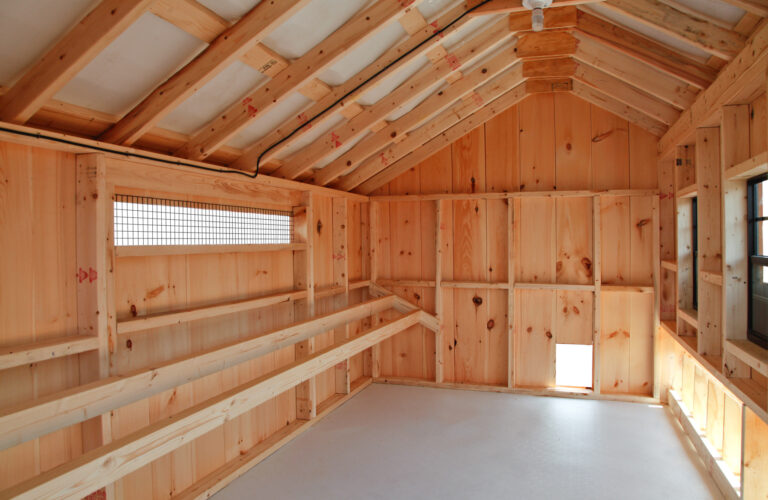
Working with a custom builder like The Hen House Collection makes it easier to create a coop around those requirements. Available features include predator-resistant doors, feed rooms, epoxy flooring, vents, screened windows, and more. You can also choose from a range of in-stock sizes to find an option that fits your flock and property. Confirm your final plans with local officials, then request a quote to get started.

Hanna Ingold
Hanna Ingold is an expert with The Hen House Collection, specializing in chicken coop regulations and poultry care. She helps homeowners navigate local state zoning and building law requirements while ensuring their chicken coops are safe, legal, and well-designed. In addition to her expertise, Hanna is highly knowledgeable in chicken care, including flock health, nutrition, and coop design, making her a trusted resource for healthy chicken keeping.