
Choosing the best home for your backyard flock of chickens involves many considerations. It’s not just about whether or not they are allowed in your area, but whether the environment is one they’ll thrive in. Are the temperatures just right? Will you have to worry about predators?
We created this guide so you can choose the best home for your flock without worrying about any of these things.
Best States for Backyard Chickens at a Glance
We’ll break down why each state is worthwhile in more depth below, but if you’re curious which 10 states made our list and why, check out the table below.
| State | Why It Made the List | Chicken Law Guide |
| Utah | Several communities allow more than 6 hens | Utah laws |
| Oregon | Small yard options and mild temperatures in western areas | Oregon laws |
| Maine | State law protects keeping hens on residential property | Maine laws |
| Arizona | State protection for up to 6 chickens at qualifying homes | Arizona laws |
| Washington | Up to 8 birds on any Seattle lot, plus mild western temperatures | Washington laws |
| Colorado | One-time keeping permits in Denver and Aurora | Colorado laws |
| North Carolina | Up to 10 hens on eligible Durham properties | North Carolina laws |
| New Mexico | Up to 15 poultry, including 1 rooster, in Albuquerque | New Mexico laws |
| Minnesota | A permit option for up to 15 hens in St. Paul | Minnesota laws |
| New York | Hens are allowed in New York City | New York laws |
How We Selected These States

We selected these states based on our own research in our backyard chicken laws by state articles, along with climate considerations in each state. Each state was then considered based on legal permissions, the practicality of local requirements, and regional climate.
This list is not meant to be a definitive ranking, but rather a list of states based on these factors. Different considerations may earn different states a spot on your list.
1. Legal Permissions
Can you keep a few hens in a neighborhood yard, or do you need several acres? We looked at how many researched communities allow chickens, how many birds you can keep, and which properties qualify. We considered statewide protections that help protect your ability to keep chickens in your backyard.
2. Practicality of Requirements
Permission doesn’t help much if the required setbacks leave nowhere to put your coop. We considered how much space you need, what permits cost, how often you must renew them, and if you need your neighbors’ approval. These details help determine how easy it is to meet the rules for keeping chickens in your backyard.
3. Regional Climate
Keeping water from freezing through winter takes work, and so does helping your birds through a hot, humid summer. We considered the weather that can make daily flock care more demanding. Since conditions vary by state, we highlighted regional differences to help you assess your area.
10 States to Consider for Backyard Chickens

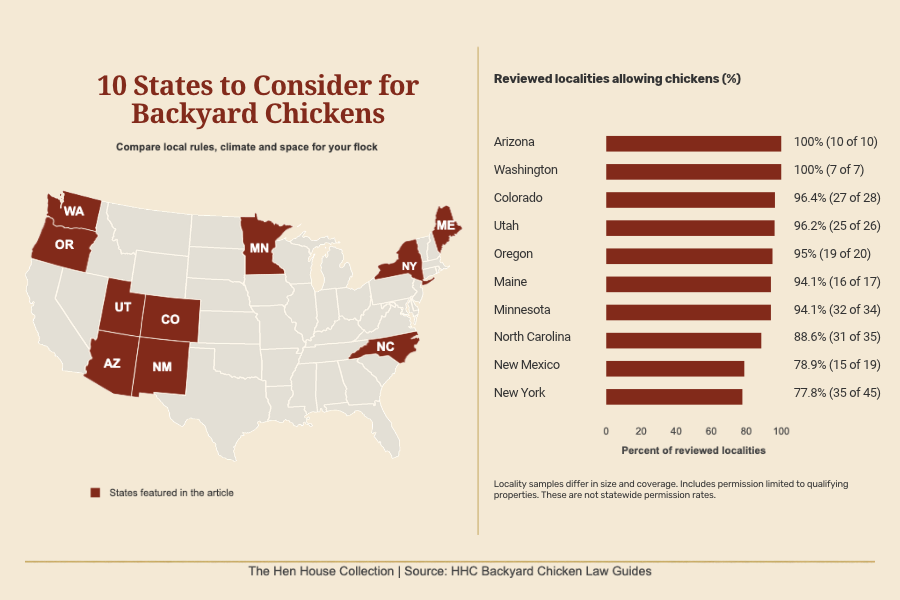
These states offer different advantages, from more room for hens to stronger legal protections and milder weather. The percentages below describe the places covered in our research, including places that allow chickens only on certain properties. They do not guarantee permission for every backyard.
1. Utah
If you’d like to keep more than 6 chickens, Utah is a state to consider. Chickens were allowed under local rules in 25 of 26 places we reviewed, or 96.2%. Bountiful allows 8 hens, Millcreek allows 10 domestic fowl, and Salt Lake City allows 15 hens with a permit.
Some communities make getting started relatively simple. Bountiful has a one-time $5 license, while Draper lets you keep chickens under its rules without applying for special permission. Space can still be the deciding factor. Salt Lake City requires chickens to stay at least 25 feet from a home on a neighboring property.
Summer heat and winter cold vary with location and elevation, so your birds will need a setup suited to both seasons. Raccoons are a concern, too. Utah gives you options for a larger flock, provided your yard has enough room for the birds and the required space around their coop.
2. Oregon
A smaller property doesn’t have to keep you from having chickens in Oregon. Portland allows 4 small domestic fowl on any lot without a keeping permit, or 6 on lots of at least 10,000 square feet. Eugene allows 6 adults plus 6 younger birds on smaller properties that meet its rules.
Chickens were allowed under local rules in 19 of 20 places we reviewed (95%), although some places follow the same county rules. Portland removes the keeping permit step, but you still need room for the enclosure. Structures generally must stay 3 feet from the side and rear property lines and 10 feet from the front property line. Properties with multiple homes have additional spacing rules.
Western Oregon’s generally mild temperatures add to its appeal. Rain makes drainage and dry shelter important, while eastern Oregon generally has hotter, drier summers and colder winters. Raccoons and, in some areas, coyotes and bobcats mean your flock still needs a secure home.
3. Maine
Maine is worth considering when protection for your ability to keep hens matters most. State law limits counties’ and municipalities’ ability to ban hens on residential property. Local governments still have authority over other requirements, so the protection doesn’t mean every flock or coop setup is automatically allowed.
Our earlier research found permission in 16 of 17 places reviewed (94.1%), but those findings need to be checked against the newer state protection. South Portland, for example, requires a yearly keeping permit and building permits for the henhouse and pen. There can still be paperwork before your birds move in.
Winter is the bigger everyday commitment. Keeping water unfrozen and housing dry takes attention during cold spells, and ventilation remains important. Foxes, coyotes, raccoons, mink, and weasels can threaten poultry too. Maine offers a strong legal reason to consider it, but milder places offer fewer winter chores.
4. Arizona
A small residential flock has state law on its side in Arizona. Up to 6 chickens are protected at detached single-family homes on lots of half an acre or less that meet the law’s conditions. All 10 places we reviewed allowed chickens under their rules.
That’s encouraging if you want a few hens close to home. Before choosing a coop, check where it can go. Local governments may require the enclosure to stay at least 20 feet from neighboring property, which can leave smaller yards with limited options. They may also prohibit roosters and set cleaning requirements.
Lower desert summers can be demanding for your birds. Shade, airflow, and reliable water access require careful planning, while higher elevations present different conditions. Coyotes and bobcats are concerns as well. Arizona’s protection is a real advantage, but your yard needs to work for your flock through summer.
5. Washington
Keeping several hens doesn’t necessarily mean needing acreage in Washington. Seattle allows 8 domestic fowl on any city lot, while Bellevue allows 6 and Tacoma generally allows 6 adult poultry. All 7 places we reviewed allowed chickens under their rules, although that is a small sample.
Larger flocks can take more effort. Tacoma requires written permission from certain nearby property owners to increase to as many as 10 adult poultry. Enclosures must stay at least 12 feet from homes, so check your yard’s layout before deciding how many birds to keep.
Western lowlands offer relatively moderate temperatures, making them appealing if you want fewer severe heat and cold extremes to manage. Rain is the trade-off, with drainage and dry shelter deserving attention. Eastern Washington has greater seasonal temperature swings. Raccoons live in urban areas too, so neighborhood hens still need secure housing.
6. Colorado
Colorado is worth considering if you want several local options and a clear process for getting permission. Chickens were allowed under local rules in 27 of 28 places we reviewed (96.4%). Denver allows 8 hens or ducks combined through a one-time $25 permit.
Aurora also has a one-time $40 permit program. These programs avoid a yearly keeping permit fee, but the property still needs to meet the rules. Aurora’s permits are for single-family homes, and renters need written permission from their landlord. Building and placement rules for the coop need to be checked separately.
Weather changes considerably with elevation and location, including large temperature changes from day to night. Coyotes, bobcats, hawks, and owls can threaten poultry. Colorado offers useful local programs, with your property’s weather and surrounding wildlife helping determine the setup your birds need.
7. North Carolina
North Carolina offers choices for a few laying hens or a somewhat larger household flock. Chickens were allowed under local rules in 31 of 35 places we reviewed (88.6%). Durham allows up to 10 hens on properties that meet its rules, while Cary allows 5 under its smaller residential flock rules.
The allowance needs to leave you enough room for a coop. Durham requires coops to stay 15 feet from property lines and pens 5 feet away. Cary’s smaller residential flock option requires a permit and at least 6,000 square feet of property. Both options restrict the sale of eggs and birds, which matters if you hope to sell your extras.
Humid summer heat makes shade and airflow important. Mountain areas generally have colder winters than lower elevations. Foxes, raccoons, hawks, and coyotes are concerns too. North Carolina gives you communities to compare, with flock size, yard space, and summer care helping narrow your choices.
8. New Mexico
Hoping to keep a rooster alongside your hens? Albuquerque gives New Mexico an option worth exploring, allowing up to 15 poultry, including no more than 1 rooster per household. Chickens were allowed under local rules in 15 of 19 places we reviewed, or 78.9%.
Gallup offers a different benefit for a smaller flock. It allows 4 hens in certain residential areas through a free permit that stays in effect while you keep hens at the approved location. Its enclosure still needs to be 5 feet from the side and rear property lines and 10 feet from other structures. Albuquerque’s limit covers poultry together, rather than 15 of each type.
Lower southern areas are warmer, while northern mountain areas have much colder winters. Summer storms make drainage important too. Skunks can take poultry and eggs, so protection beneath coops and fencing deserves attention. These local options make New Mexico worth a look when a rooster or a free, lasting permit suits your plans.
9. Minnesota
Minnesota offers plenty of places to investigate for a backyard flock. Chickens were allowed under local rules in 32 of 34 places we reviewed (94.1%), although the number you can keep varies considerably. St. Paul allows up to 15 hens, while Rochester generally allows 3, with larger numbers reserved for certain educational activities.
A larger flock in St. Paul comes with more steps. Keeping 7 to 15 hens requires approval from a set number of nearby neighbors, a $76 start-up fee, and a $28 annual renewal fee. Keeping 1 to 6 hens costs $26 initially and $16 a year, with adjacent neighbors told in writing.
Bitter winter cold and warm, humid summers bring different care needs. Raccoons, rats, hawks, owls, and cats can threaten poultry too. Minnesota can work well when the local rules suit your flock, but expect more winter preparation than in the milder regions on this list.
10. New York
City living doesn’t have to mean giving up fresh eggs from your own hens. New York City permits hens, and chickens are allowed under local rules in 35 of 45 places we reviewed, or 77.8%. Some of those places require extra approval or limit which properties can keep them.
Buffalo shows why the details matter. It allows up to 5 hens but requires written permission from nearby residents, an inspection, and a listed yearly fee of $25 per hen. For five birds, that is $125 a year just for licensing. Check the process and recurring costs before assuming that permission makes getting started easy.
Winter cold and snowfall vary by region. Foxes, raccoons, mink, hawks, and owls are concerns, so shelter and secure outdoor space both matter. New York is worth considering if your goal is to keep hens in an urban community, provided the local rules and your property make daily care manageable.
Which States Have the Friendliest Backyard Chicken Laws?
This list considers several factors, but permission and practical requirements may matter most to you. Our guide to the states with the friendliest backyard chicken laws takes a closer look at flock limits, property requirements, permits, and the space you need for a coop.
Which States Have the Best Climate for Backyard Chickens?
Friendly laws don’t always come with easy weather. A state may welcome your flock but still bring freezing winters or summer heat that requires extra attention.
Our guide to the best climates for backyard chickens focuses on temperatures, humidity, rainfall, and the seasonal care your birds may need. Conditions can change considerably within a state, so highlighting regional differences helps you assess your area.
How Do Predator Threats Affect Your Choice?
Every area has predators, but the threats around your backyard depend on the surrounding habitat, nearby animals, and how your flock spends time outdoors.
Our guide to backyard chicken predators by state helps you understand the threats to prepare for and how to protect your birds. It can’t tell you that one state is safest, but it can help you plan a more secure coop and run wherever your flock lives.
Before Choosing a Place for Your Flock
A state’s place on this list is only a starting point. Before bringing chickens home or choosing a new property, check these details:
- Find out whose rules apply. Confirm that you’re checking the right city, town, or county for the property.
- Check what you can keep. Review hen limits, rooster restrictions, property requirements, and any permits or approvals.
- Look beyond local laws. HOA rules, deed restrictions, or rental agreements may add restrictions.
- Measure the usable space. Make sure your coop and run will fit while leaving the required distance from property lines and neighboring homes.
- Consider your birds’ daily comfort. Look at shade, drainage, summer heat, winter cold, and access to water.
- Plan for predators. Consider nearby woods, wildlife activity, and neighborhood pets when deciding how to enclose your flock.
Get the Right Coop Setup for Your State
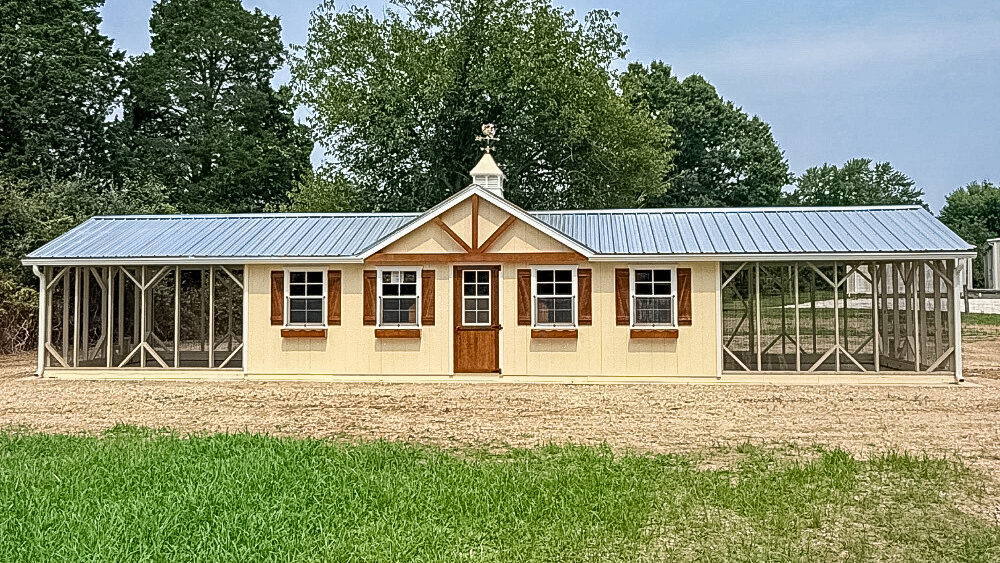
The right location is only part of giving your flock a good home. Your coop needs to meet local requirements and provide protection from the weather and predators. A setup for a rainy Oregon backyard may need different features than one facing Arizona’s desert heat or Maine’s cold winters.
At The Hen House Collection, we build customizable chicken coops and work with dealers across the contiguous United States. Share your flock size, available space, and local requirements so we can help you explore suitable coop sizes, layouts, and options.
Local officials will need to confirm that your plans meet their requirements. We can help you choose a home for your birds that provides ventilation, weather protection, and features to deter predators, all suited to your needs.

Hanna Ingold
Hanna Ingold is an expert with The Hen House Collection, specializing in chicken coop regulations and poultry care. She helps homeowners navigate local state zoning and building law requirements while ensuring their chicken coops are safe, legal, and well-designed. In addition to her expertise, Hanna is highly knowledgeable in chicken care, including flock health, nutrition, and coop design, making her a trusted resource for healthy chicken keeping.