

If you’re ready to start raising backyard chickens in Mississippi, the first question is usually simple: Can I legally have chickens where I live? The answer depends on your city, county, and sometimes even your neighborhood. While many Mississippi communities allow backyard flocks, the rules can vary on everything from the number of hens you can keep to whether permits, setbacks, or rooster restrictions apply. This guide makes it easy to find your local regulations so you can move forward with confidence and start planning your coop.
Last Updated:
Is It Legal to Have Chickens in Your Backyard in Mississippi?

Yes, backyard chickens are legal in many parts of Mississippi, but there is no statewide law that regulates them. Instead, the rules are set by individual cities, counties, and homeowners’ associations (HOAs). Many cities limit the number of hens allowed, prohibit roosters, require permits, or have setback requirements for chicken coops.
Rural and agriculturally zoned properties are generally more accommodating, while standard residential neighborhoods often have stricter regulations. Before starting a backyard flock, check your local ordinances, zoning requirements, and any HOA covenants to ensure you comply with the rules in your area.
Do You Need A Permit For Chickens in Mississippi?

No. Mississippi does not require a statewide permit to keep backyard chickens, but many cities have their own regulations. Some communities, including Hattiesburg, Gulfport, Meridian, Olive Branch, and Pascagoula, require a permit or annual registration, while rural and unincorporated areas typically do not.
If you’re building a permanent chicken coop, check with your local building department, as a building permit may be required depending on the size of the structure. Regardless of permit requirements, your coop must still comply with local zoning rules, including setback requirements.
How Many Chickens Can I Have in Mississippi?
In most Mississippi cities, you can typically keep between 2 and 10 hens on a residential property. The exact limit depends on your local ordinances, lot size, and zoning district. Many cities cap backyard flocks at around 6 hens, while rural and unincorporated areas often allow larger flocks with fewer restrictions.
Here’s a general overview of what you’ll find across Mississippi:
- Jackson: Up to 6 hens allowed.
- Biloxi, Gulfport, and Pearl: Generally limited to 2 hens per residential lot.
- Olive Branch: Up to 10 chickens with a permit.
- Hattiesburg, Southaven, and Tupelo: Permits are typically required, but there is no set maximum number of hens.
- Roosters: Prohibited in most cities due to noise regulations.
- Rural & Unincorporated Areas: Larger flocks of 20 to 50+ chickens are often permitted, subject to local zoning and nuisance rules.
Can I Let My Chickens Free-Range in My Backyard?

Yes, free-ranging backyard chickens are generally allowed in Mississippi, as there is no statewide law prohibiting the practice. However, your ability to let chickens roam depends on your local city or county ordinances, as well as any neighborhood restrictions that apply to your property.
Even if you let your chickens free-range during the day, they still need a secure coop and run. A quality coop protects your flock from predators, provides a safe place to roost and lay eggs, and helps keep your chickens contained when you’re away or at night.
Can I Have A Rooster In My Backyard in Mississippi?

Yes, you may be able to keep a rooster in Mississippi, but the rules vary by city and county because there is no statewide law regulating backyard roosters.
In many residential areas, including Biloxi, Gulfport, Hattiesburg, and Tupelo, roosters are prohibited due to noise ordinances and neighborhood nuisance regulations. However, if you live on several acres, in an unincorporated area, or on property zoned for agricultural or rural residential use, roosters are often permitted because they are less likely to create noise complaints or violate local setback requirements. Larger properties generally provide enough distance between coops and neighboring homes to minimize disturbances, making roosters more acceptable under local zoning rules. Before adding a rooster to your flock, check your local ordinances and property zoning to confirm whether they are allowed where you live.
Can I Sell My Chicken Eggs in Mississippi?

Yes, you can sell eggs from your backyard flock in Mississippi, but the requirements vary depending on how many eggs you sell and where you sell them. The Mississippi Department of Agriculture and Commerce (MDAC) oversees the state’s Egg Marketing Law and provides guidance for egg producers.
- Small-Scale Sales: If you sell fewer than six dozen eggs (72 eggs) per week or sell directly from your own property, you are generally exempt from Mississippi’s commercial egg marketing regulations.
- Egg Quality: Eggs should be clean, uncracked, and safe for consumption before being sold.
- Carton Labeling: It’s recommended to label each carton with your farm name and address so customers know where the eggs were produced.
Chicken Laws For Cities in Mississippi
The table below includes links to official city and county resources where you can find the latest backyard chicken regulations in Mississippi. Click on your city to view its local ordinances, permit requirements, and other rules before starting your flock.
Does Biloxi, MS Allow Backyard Chickens?
Yes, Biloxi allows backyard chickens, but there are limits on flock size and additional requirements for larger flocks.
- Permit: No permit is required for up to 2 hens. A Conditional Use Permit is required for more than two chickens.
- Number of Chickens: Up to 2 hens are allowed by right. Larger flocks may be approved with a permit.
- Roosters: Not allowed within city limits.
- Zoning & Lot Requirements: Larger flocks must comply with the city’s zoning and Conditional Use Permit requirements.
- Coop Requirements: Chickens must be kept in a secure, covered enclosure.
- Setbacks: Coops and enclosures for larger flocks must be at least 150 feet from neighboring property lines.
- Space & Sizing: No minimum coop or run size is specified in the ordinance.
- HOA & Other Restrictions: HOA rules may be more restrictive than city regulations.
Contact the Biloxi Planning & Zoning department for more information.
Does Brandon, MS Allow Backyard Chickens?
Yes, Brandon allows backyard chickens on single-family residential lots as long as homeowners follow the city’s regulations.
- Permit: No permit is required.
- Number of Chickens: Up to 6 hens are allowed per residential lot.
- Roosters: Not permitted, and chicken breeding is prohibited.
- Zoning & Lot Requirements: Chickens are allowed in single-family residential zones.
- Coop Requirements: Coops must be located in the side or rear yard and may not exceed 30 square feet.
- Setbacks: Coops must be at least 5 feet from the side and rear property lines.
- Space & Sizing: Chicken runs may not exceed 60 square feet.
- HOA & Other Restrictions: HOA rules may impose additional restrictions.
For more information, contact Brandon Economic Development department.
Does Clinton, MS, Allow Backyard Chickens?
No, most residential properties in Clinton do not allow backyard chickens. Chickens are generally limited to larger properties that meet the city’s livestock zoning requirements.
- Permit: No special permit is required for qualifying properties, but zoning regulations apply.
- Number of Chickens: Up to 10 chickens are allowed on qualifying properties.
- Roosters: Not permitted within city limits.
- Zoning & Lot Requirements: Chickens are allowed in A-1 Agricultural districts or on residential properties with at least 5 acres.
- Coop Requirements: Coops must comply with the city’s livestock regulations.
- Setbacks: Must meet applicable zoning setback requirements.
- HOA & Other Restrictions: Backyard chickens are generally prohibited in standard residential subdivisions and smaller neighborhood lots.
Does Columbus, MS Allow Backyard Chickens?
Yes, Columbus allows backyard chickens as long as they are properly contained and do not create a nuisance for neighboring properties.
- Permit: No special city permit is required.
- Number of Chickens: The city does not specify a maximum number of hens, provided the flock is properly maintained.
- Roosters: No specific city prohibition, but nuisance ordinances apply.
- Zoning & Lot Requirements: Standard residential zoning regulations apply.
- Coop Requirements: Chickens must be securely contained on your property.
- HOA & Other Restrictions: Flocks cannot create excessive noise, odors, or unsanitary conditions, and HOA rules may impose additional restrictions.
Please contact the Columbus Planning & Community Development for more information on backyard chickens.
Does Greenville, MS Allow Backyard Chickens?
No, most residential properties in Greenville do not allow backyard chickens. Chickens are generally permitted only on larger properties that meet the city’s acreage requirements.
- Permit: No special permit is typically required for qualifying properties.
- Number of Chickens: Up to 10 hens are allowed on eligible properties.
- Roosters: Not permitted in residential areas.
- Zoning & Lot Requirements: Chickens are generally allowed only on properties with at least 3 acres.
- Coop Requirements: Coops must comply with the city’s livestock regulations.
- Setbacks: Coops and enclosures must be at least 150 feet from neighboring homes and public streets.
- HOA & Other Restrictions: Backyard chickens are generally prohibited on standard residential lots, and HOA rules may impose additional restrictions.
Browse Greenville Planning Department for more information.
Does Gulfport, MS Allow Backyard Chickens?
Yes, Gulfport allows backyard chickens, but homeowners must follow the city’s regulations regarding flock size, permits, and coop placement.
- Permit: No permit is required for up to 2 hens. A city permit is required for larger flocks.
- Number of Chickens: Up to 2 hens are generally allowed on a standard residential lot.
- Roosters: Not permitted within city limits.
- Zoning & Lot Requirements: Larger flocks must comply with the city’s zoning requirements.
- Coop Requirements: Chickens must be kept in a secure enclosure.
- Setbacks: Coops and enclosures must meet the city’s setback requirements and be located an appropriate distance from neighboring properties.
- HOA & Other Restrictions: HOA rules may be more restrictive than city ordinances.
Chicken ordinances can change, so always verify the latest requirements with the City of Gulfport Planning & Zoning department before purchasing chickens or building a coop.
Does Hattiesburg, MS Allow Backyard Chickens?
Yes, Hattiesburg allows residents to keep backyard hens for personal, non-commercial use, provided they comply with the city’s regulations.
- Permit: No special permit is generally required for personal backyard hens.
- Number of Chickens: Hens are allowed for non-commercial use; the city does not specify a maximum flock size.
- Roosters: Not permitted due to noise and nuisance regulations.
- Zoning & Lot Requirements: Chickens must comply with applicable zoning regulations.
- Coop Requirements: Enclosures must be properly maintained and kept in a sanitary condition.
- HOA & Other Restrictions: Flocks must not create excessive noise, odors, or other nuisances, and HOA rules may impose additional restrictions.
Before adding chickens to your property, contact the City of Hattiesburg Planning Department to confirm the current regulations, permit requirements, and any restrictions that apply to your neighborhood.
Does Horn Lake, MS Allow Backyard Chickens?
No, Horn Lake does not allow backyard chickens in most residential neighborhoods. Chickens are generally permitted only on properties zoned Agricultural-Residential (AR) that meet the city’s zoning requirements.
- Permit: A local permit is generally required before keeping backyard chickens.
- Number of Chickens: Allowed only on qualifying Agricultural-Residential properties.
- Roosters: Not permitted.
- Zoning & Lot Requirements: Chickens are permitted only in AR zones and are prohibited in R-1, R-2, and R-3 residential districts. A minimum 1-acre lot is required.
- Coop Requirements: Poultry housing must comply with the city’s livestock regulations.
- Setbacks: Poultry housing must be located at least 100 feet from property lines or neighboring uses.
- HOA & Other Restrictions: HOA covenants may further restrict or prohibit backyard chickens, even on qualifying properties.
Contact the City of Horn Lake Planning & Zoning department before starting a flock to verify the current zoning, permit, and housing requirements for your property.
Does Jackson, MS Allow Backyard Chickens?
Yes, Jackson allows backyard chickens, but homeowners must comply with local zoning regulations, property requirements, and nuisance ordinances.
- Permit: Additional approvals may be required depending on your property’s zoning.
- Number of Chickens: Residential properties are generally limited to 2 to 6 hens, depending on zoning and lot size.
- Roosters: Generally not permitted in residential neighborhoods due to noise restrictions.
- Zoning & Lot Requirements: Chickens are allowed in certain residential and agricultural areas, though some R-1 single-family properties must meet additional zoning or minimum lot size requirements.
- Coop Requirements: Coops should be securely enclosed and maintained in a sanitary condition.
- HOA & Other Restrictions: Chickens must not create a nuisance, and HOA covenants may prohibit or further restrict backyard flocks.
Before starting a backyard flock, check with the City of Jackson Planning and Development Department to confirm your property’s zoning and any current requirements that may apply.
Does Madison, MS Allow Backyard Chickens?
No, Madison does not allow backyard chickens on standard residential lots or within residential subdivisions. Chickens are permitted only on properties zoned for agricultural use that meet the city’s zoning requirements.
- Permit: No special permit is typically required on qualifying agricultural properties, but zoning regulations apply.
- Number of Chickens: Allowed on qualifying A-1 Agricultural properties in accordance with local regulations.
- Roosters: Allowed only on qualifying agricultural properties.
- Zoning & Lot Requirements: Chickens are permitted only in A-1 Agricultural Districts and are prohibited in residential subdivisions.
- Coop Requirements: Pens and coops must comply with the city’s agricultural zoning regulations.
- Setbacks: Pens and coops housing more than two fowl must be at least 200 feet from adjoining property lines and street rights-of-way.
- HOA & Other Restrictions: HOA covenants and subdivision restrictions may prohibit poultry even if city zoning would otherwise allow it.
If your property is outside a residential subdivision or zoned for agricultural use, contact the City of Madison Planning Department to verify the current zoning and poultry regulations before establishing a flock.
Does Meridian, MS, Allow Backyard Chickens?
Yes, Meridian allows residents to keep backyard hens, provided they follow the city’s poultry regulations.
- Permit: A city permit is required before keeping backyard chickens.
- Number of Chickens: Backyard hens are allowed, and the city does not specify a maximum flock size.
- Roosters: Not permitted within city limits.
- Zoning & Lot Requirements: Chickens must comply with the city’s zoning and nuisance regulations.
- Coop Requirements: Coops should be secure and maintained in a sanitary condition.
- HOA & Other Restrictions: HOA rules and deed restrictions may further limit or prohibit backyard chickens.
To ensure you meet the latest requirements, contact the City of Meridian before purchasing chickens or constructing a coop.
Does Olive Branch, MS, Allow Backyard Chickens?
Yes, Olive Branch allows backyard hens, but homeowners must follow the city’s regulations regarding flock size, permits, and coop placement.
- Permit: A city permit is required before keeping backyard chickens.
- Number of Chickens: Up to 10 hens are allowed per property.
- Roosters: Not permitted within city limits.
- Zoning & Lot Requirements: Chickens must comply with the city’s zoning requirements.
- Coop Requirements: Coops and enclosures must be properly maintained and securely house the flock.
- Setbacks: Chicken coops and enclosures must generally be at least 50 feet from neighboring homes.
- HOA & Other Restrictions: HOA covenants may be more restrictive than city ordinances or prohibit backyard chickens altogether.
Before adding chickens to your property, contact the City of Olive Branch Planning Department to verify the current permit process, zoning requirements, and any restrictions that may apply to your address.
Does Oxford, MS Allow Backyard Chickens?
Yes, Oxford allows residents to keep backyard hens, but the applicable rules depend on whether your property is located within the City of Oxford or unincorporated Lafayette County.
- Permit: Permit requirements vary between the City of Oxford and Lafayette County.
- Number of Chickens: Flock limits depend on your property’s location and zoning.
- Roosters: Roosters may be restricted, particularly within city limits.
- Zoning & Lot Requirements: Chicken regulations are based on local zoning and whether your property is located within the city or county.
- Coop Requirements: Coops should be securely enclosed and maintained in a sanitary condition.
- HOA & Other Restrictions: HOA covenants may prohibit or further restrict backyard chickens.
Because regulations differ between the City of Oxford and Lafayette County, contact the appropriate local planning or zoning office to verify the current requirements for your property before starting a flock.
Does Pascagoula, MS Allow Backyard Chickens?
Yes, Pascagoula allows backyard chickens, but homeowners must meet the city’s setback requirements before keeping a flock.
- Permit: No special city permit is generally required.
- Number of Chickens: The city does not specify a maximum flock size.
- Roosters: Roosters may be subject to local nuisance and noise regulations.
- Zoning & Lot Requirements: Larger residential or semi-rural properties are generally better suited to meeting the city’s poultry regulations.
- Coop Requirements: Coops must be located on the property in compliance with local regulations.
- Setbacks: Chickens and other domestic fowl must be kept at least 100 feet from any neighboring residence.
- HOA & Other Restrictions: Hogs and pigs are prohibited within city limits, and HOA covenants may impose additional restrictions on backyard chickens.
Since the 100-foot setback can limit where chickens are allowed, it’s a good idea to contact the City of Pascagoula Planning, Building & Code Enforcement to confirm your property meets the current requirements before building a coop.
Does Ridgeland, MS Allow Backyard Chickens?
Yes, Ridgeland allows backyard chickens, but only on properties that meet the city’s zoning and minimum lot size requirements.
- Permit: A local permit is required before keeping backyard chickens.
- Number of Chickens: The city does not specify a maximum flock size for qualifying properties.
- Roosters: Not permitted within city limits.
- Zoning & Lot Requirements: Chickens are allowed only on properties 1 acre or larger. Standard residential lots under 1 acre are not eligible.
- Coop Requirements: Chickens must be securely contained and kept in a sanitary enclosure.
- Setbacks: Coops and enclosures must be at least 100 feet from neighboring properties.
- HOA & Other Restrictions: Chickens must not create excessive noise, odors, or other public nuisances, and HOA covenants may impose additional restrictions.
If you’re considering backyard chickens in Ridgeland, contact the city’s planning or zoning department to verify your property’s eligibility and the latest permit requirements before getting started.
Does Southaven, MS Allow Backyard Chickens?
No, Southaven does not allow backyard chickens on standard residential properties. The city’s zoning regulations prohibit keeping poultry within most residential neighborhoods.
- Permit: Backyard chicken permits are not available for standard residential properties.
- Number of Chickens: Not permitted in residential zoning districts.
- Roosters: Prohibited throughout the city.
- Zoning & Lot Requirements: Poultry is prohibited in most residential zones. Larger agricultural or unincorporated properties outside the city may be subject to DeSoto County regulations instead.
- HOA & Other Restrictions: HOA covenants may include additional restrictions where applicable.
If you’re unsure whether your property falls within Southaven city limits or DeSoto County jurisdiction, contact the City’s Planning Department to verify your zoning and the regulations that apply to your property before purchasing chickens.
Does Starkville, MS Allow Backyard Chickens?
Yes, Starkville allows residents to keep backyard hens, provided they comply with the city’s regulations on flock size, coop placement, and residential use.
- Permit: Contact the Starkville Building Department or Animal Control to determine whether a permit or registration is required for your property’s zoning district.
- Number of Chickens: Up to 6 hens are allowed on a standard residential lot.
- Roosters: Not permitted due to local noise regulations.
- Zoning & Lot Requirements: Chickens are allowed on qualifying residential properties in accordance with local zoning regulations.
- Coop Requirements: Coops and enclosures must be securely maintained.
- Setbacks: Coops and enclosures must be at least 25 feet from property lines and 50 feet from neighboring homes.
- HOA & Other Restrictions: HOA covenants and neighborhood restrictions may further limit or prohibit backyard chickens.
Before starting a backyard flock, reach out to the City of Starkville Planning Department to confirm the current zoning requirements, permit process, and coop placement regulations for your property.
Does Tupelo, MS Allow Backyard Chickens?
Yes, Tupelo permits residents to keep backyard hens, provided they comply with the city’s poultry regulations.
- Permit: A city permit is required before keeping backyard chickens.
- Number of Chickens: The city does not specify a maximum number of hens.
- Roosters: Not permitted within city limits.
- Zoning & Lot Requirements: Chickens must comply with the city’s zoning and residential property requirements.
- Coop Requirements: Coops should be secure, sanitary, and properly maintained.
- HOA & Other Restrictions: HOA covenants and neighborhood restrictions may further limit or prohibit backyard chickens.
To avoid any surprises, contact the City of Tupelo Development Services before purchasing chickens to verify the latest permit requirements, zoning regulations, and any restrictions that apply to your property.
Does Vicksburg, MS Allow Backyard Chickens?
Yes, Vicksburg allows residents to keep backyard hens, provided they follow the city’s requirements for flock size, permits, and coop placement.
- Permit: A permit must be obtained through Vicksburg Animal Control before keeping a backyard flock.
- Number of Chickens: Up to 6 hens are allowed on a standard residential lot.
- Roosters: Not permitted within city limits.
- Zoning & Lot Requirements: Chickens must comply with the city’s residential zoning requirements.
- Coop Requirements: Coops and enclosures must be securely maintained and kept in a sanitary condition.
- Setbacks: Chicken coops and enclosures must be at least 50 feet from neighboring homes.
- HOA & Other Restrictions: HOA covenants may impose additional restrictions or prohibit backyard chickens.
For the most current information, contact Vicksburg Planning Department to confirm permit requirements and ensure your coop meets all applicable local regulations.
Laws for Keeping Backyard Chickens in Mississippi By County
The table below provides links to official county resources where you can review the latest regulations for keeping backyard chickens in Mississippi. Select your county to find information on local zoning ordinances, permit requirements, and other guidelines that may apply to your property before starting your flock.
Find a Chicken Coop Built for Your Backyard Flock

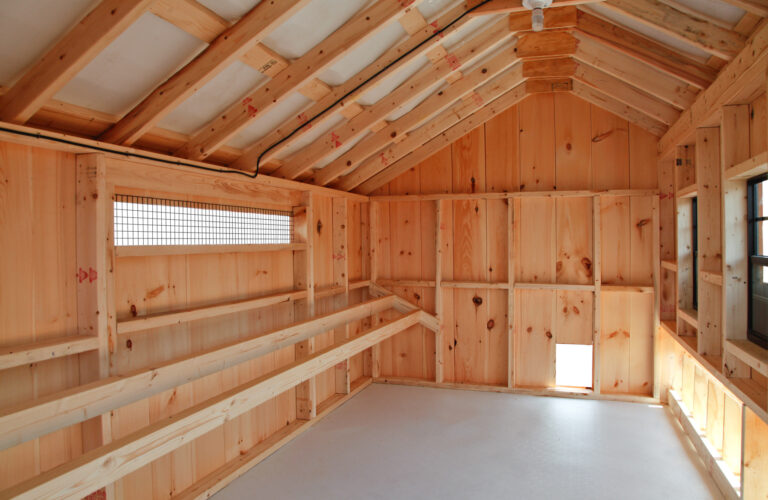
Once you’ve confirmed your local regulations, the next step is choosing a coop that fits both your flock and your property’s requirements. We offer Amish-built chicken coops in a variety of sizes and styles, making it easy to find a high-quality coop that meets local flock limits, setback requirements, and space needs. With durable construction, customizable features, and designs built to keep your chickens safe and comfortable, you can create a backyard setup that’s both practical and compliant with local ordinances. Explore our wooden chicken coops for sale and find the perfect home for your flock.

Hanna Ingold
Hanna Ingold is an expert with The Hen House Collection, specializing in chicken coop regulations and poultry care. She helps homeowners navigate local state zoning and building law requirements while ensuring their chicken coops are safe, legal, and well-designed. In addition to her expertise, Hanna is highly knowledgeable in chicken care, including flock health, nutrition, and coop design, making her a trusted resource for healthy chicken keeping.